 MEMBERSHIP LOGIN
 JOIN PRI
Engine Mapping, Power Adders and More Lead Today's Camshaft Development
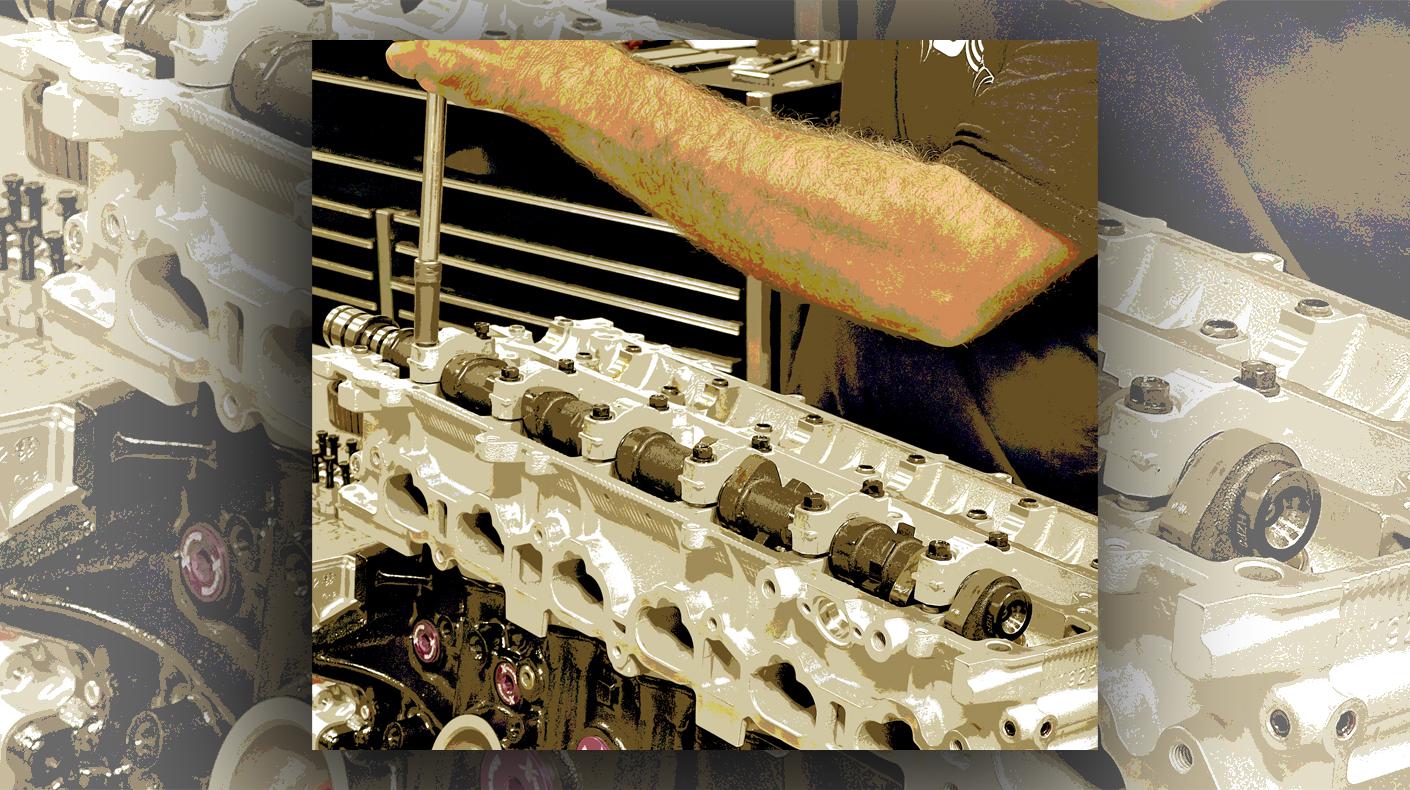
The prevalence of engine mapping and power-adder applications is driving innovation in motorsports, including camshaft development.
On-the-fly modifications of fuel injection, valve timing, boost, and other engine conditions through the electronic control unit allow tuners to push old techniques to the side and find new methods of producing just the right amount of horsepower.
The camshaft has felt the effects.
"I always like to say that innovation really does start from the racing industry and trickles its way down to street cars," said Bobby Biancaniello of Cam Motion, Baton Rouge, Louisiana. "From a camshaft standpoint, it's going to be valve timing and lobe design" that drive advancements.
While the company reps we spoke with reminded us that camshaft advancements are a case of evolution, not revolution, the cumulative effects of this constant change are substantial in terms of new products, procedures, and philosophies around camshafts.
A Reactive Process
Eric Bolander at Howards Cams in Oshkosh, Wisconsin, believes camshafts are more reactive to other innovations. "Something new has to come along," he said, such as a new block combination, cylinder head flow changes, or even a new racing class. "That's what triggers innovation with what we do."
Howards' new Boost Forced Induction Cam is an example, as it applies to turbochargers and overall better fuel mapping.
"Back in the Grand National Buick days, it took an act of God to get those turbos to spool up," he said. That led to reverse pattern cams with bigger intakes and smaller exhaust lift.
"And then turbos got better, and they started spooling up quicker, and that's why we're seeing more of the single pattern (equal intake-exhaust lift duration) grinds."
Direct injection, variable valve timing, fuel mapping, and other computerized operations in the engine are key today, he said. That includes turbos and resurging superchargers.
"The cams and cam designs really haven't changed," he said. "All the computerization just gives you so much more control over where the power is, where the mapping is."
As a result, cams don't have to be as big as they once were, Bolander added. "You can get a whole lot more punch out of a smaller, more reliable package."
That applies to the LT engine family, he noted, which is more forgiving than the small block Chevy and allows cam designers to be more aggressive.
Drag, Drive, Innovate
Speaking from his office just 10 feet from the Spintron cell in the Callies Performance Products Research Lab, Nick Norris admitted that he is intrigued by the popularity of drag-and-drive events.
He told of a six-speed, twin-turbo, Gen IV Camaro that blisters an eighth-mile in 5 seconds yet travels some 5,000 highway miles to the drag strips, all while towing a small trailer stocked with fuel, tires, and tools.
It's tough to satisfy that combination of power and street driveability, he said, but extensive testing with the Spintron at Callies' Fostoria, Ohio, facility, has pushed innovations in this segment of the market.
"We know even before we put it on the Spintron that you need to look at trying to make everything light and stiff," he said. "We're running factory hydraulic rollers, plastic lifter trays, LS3 OEM rocker arms, some special prototype springs…pretty cleanly through 8,500 rpm."
Success with drag-and-drive developments helps prove a point that too many racers mistakenly seek the biggest camshaft. "Quite honestly, we're using camshafts that are way smaller than people really think it takes to get where we're trying to go," he said.
As for innovation at the very top levels of motorsports, Norris spoke about Callies' "meticulous trial and error" to get the right combination of hardness processing for its Top Fuel cams. Callies uses mainly tool steel and some 9310 steel cores. "We determined where we needed to be with it regarding the actual core hardness versus the surface hardness and the depth of the surface hardness," he said.
Callies keeps the center of the core ductile to prevent breakage, not an easy chore with a barrel that's only 1.050 inches around. "We drive a lot of hardness deep into the lobes, but it still leaves the center of the camshaft core ductile so that it can move around some," he said.
To read the full article, plus hundreds of other articles like it, for free, sign up for a digital subscription to PRI Magazine on Zinio here.
Once you download the Zinio mobile app or are logged into Zinio on a desktop browser, you will gain immediate access to more than a year's worth of content, including "Engine Mapping, Power Adders and More Lead Today's Camshaft Development " here and additional coverage in the January/February 2026 issue here.